Student-Led Change: The Power of Anti-Tobacco Campaigns in Schools
- May 06, 2026
Under ToFEI guidelines published by the Family Welfare and Union Ministry of Health, schools must complete 9 annual anti-tobacco activities, which together form a 100-mark scorecard according to the officials. A school must ensure at least 80 marks to earn certification as a Tobacco Free Educational Institution.
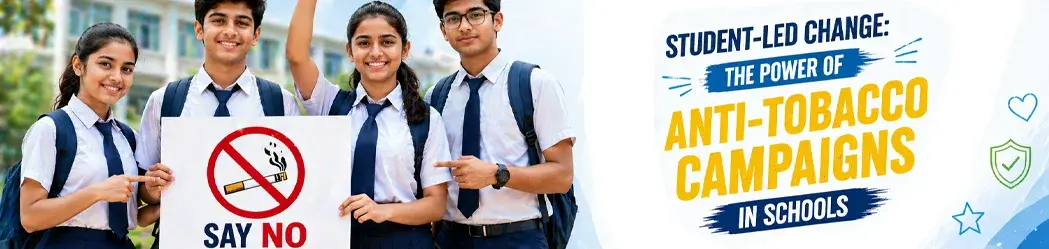
Schools fulfill activities by running awareness campaigns, installing anti-tobacco signage, coordinating student-led rallies, strictly following tobacco control norms, and building an addiction-free ecosystem for students. Nearly 10,000 schools throughout Meghalaya actively take part in signature campaigns, awareness drives, and rallies, assisting in building a statewide culture that discourages children from using tobacco, the official mentioned.
This accomplishment highlights coordinated efforts and strong leadership by the Meghalaya government, particularly in the Health and Education departments. Block, cluster, and district-level officials assured accountability, tracking, and systematic checks. The state has enforced the Digital Program Implementation methodology by Sambandh Health Foundation to perform the initiative efficiently.
Jennyfer Jones Synrem, State ToFEI Nodal Officer, mentioned, “Attaining 86% Tobacco-Free Schools is a powerful public health success for our students, highlighting the wider impact. It is closer to the ‘My Meghalaya, Tobacco-Free Meghalaya’ shared vision. Transformative results are built when schools, communities, and governance systems align with commitment and clarity.
Dr Nabaneeta D Mawrie, the State Nodal Officer (National Tobacco Control Programme), mentioned that, “34% of children aged 13 to 15 use tobacco in some form. Schools shape lifelong behaviours, and we are developing safer learning ecosystems, defending future generations from tobacco-related diseases and addiction through integrating tobacco prevention into our education model based on the Global Youth Tobacco Survey.
She added that programmes implemented at this scale will offer long-term health advantages for the whole state. The first step has successfully mobilised teachers, students, school leaders, and communities to actively defend children from tobacco exposure while encouraging healthier school ecosystems.
Officials highlighted that this accomplishment sets a new national benchmark and presents what is possible when schools, communities and governance systems function together with strong accountability and shared intention.